Would you rather £150 at 90% realisation, or £100 at 100% realisation?

Not a trick question
With UK firms looking ahead to set standard rates for 2026/27, there's a tension in raising standard rates, knowing that realisation will likely dip
Partners will be concerned about falling realisation in two ways in the coming months:
(1) any inflationary increase to the firm's standard rate card, and
(2) any upwards drift in rates (e.g. the individual on an NQ rate today, is on a higher 1 PQE rate tomorrow)
Even a relatively modest increase to the standard rate card can compound quickly and letters of engagement don't always allow for automatic rate increases
Some tips:
- Quote any new work with reference to the new rate card
- Notify/negotiate with any existing clients with an existing uplift clause, ahead of the rates increasing
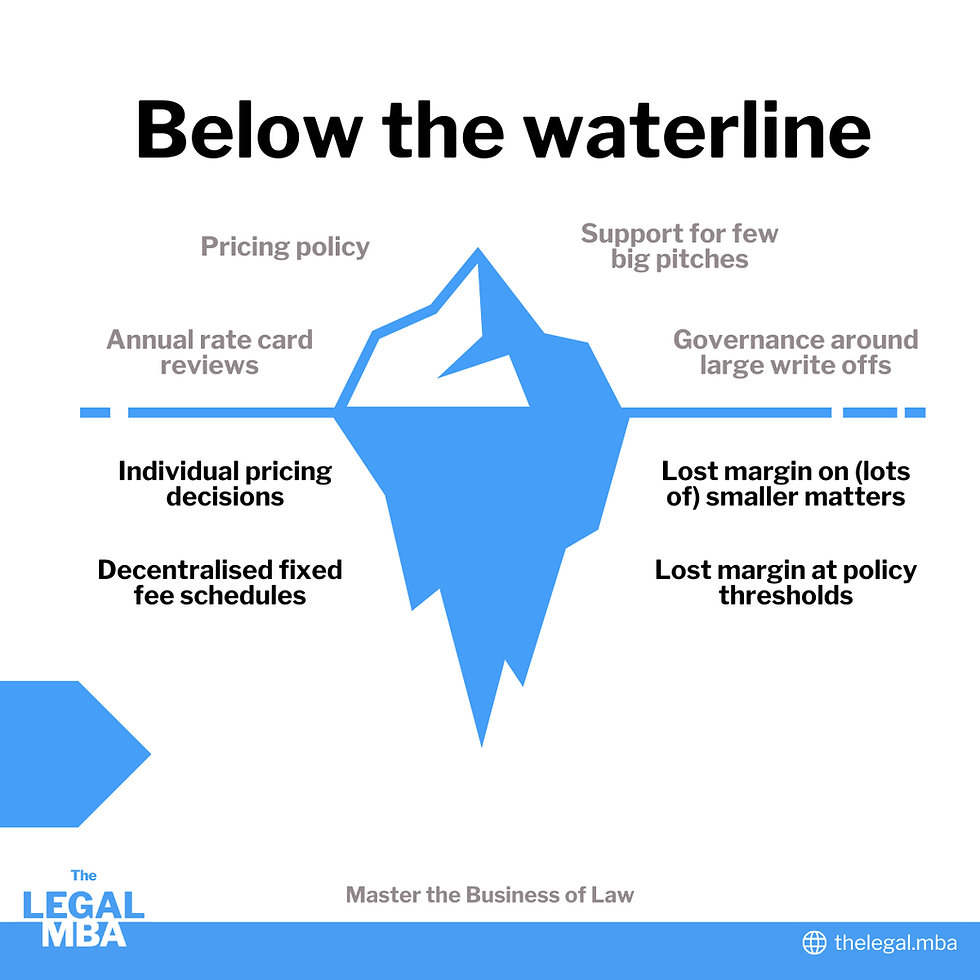
- Don't forget reviewing fixed fee schedules as these can often be missed (for years...)
- Where the impact of (2) can't be passed through, actively reallocate work to more junior fee earners to maximise realisation, gross margin and develop staff
- But where (1) can't be passed on... don't sweat it...
Realisation % has it's place in comparing different matters and teams, and for identifying where the profit leakage is between standard rate and the cash received
But it is ultimately a real number (what was billed), divided by a made up number (the standard rate)
I'd encourage partners (and indeed, firm management) to look past realisation % and instead look at improving effective rates (£'s) and gross margin %
I would absolutely rather £150 at 90% realisation, than £100 at 100% realisation
Fee income, gross profit and margin are all higher with £150 at 90% (£135), than £100 at 100%
And they are all real numbers that positively impact the P&L



Comments